

Cutting Tool Selection Guide for CNC Machining
Selecting the right cutting tools for CNC machining is critical to achieving high accuracy, superior surface finish, and longer tool life. Incorrect tool selection leads to tool wear, poor quality, and increased machining costs.
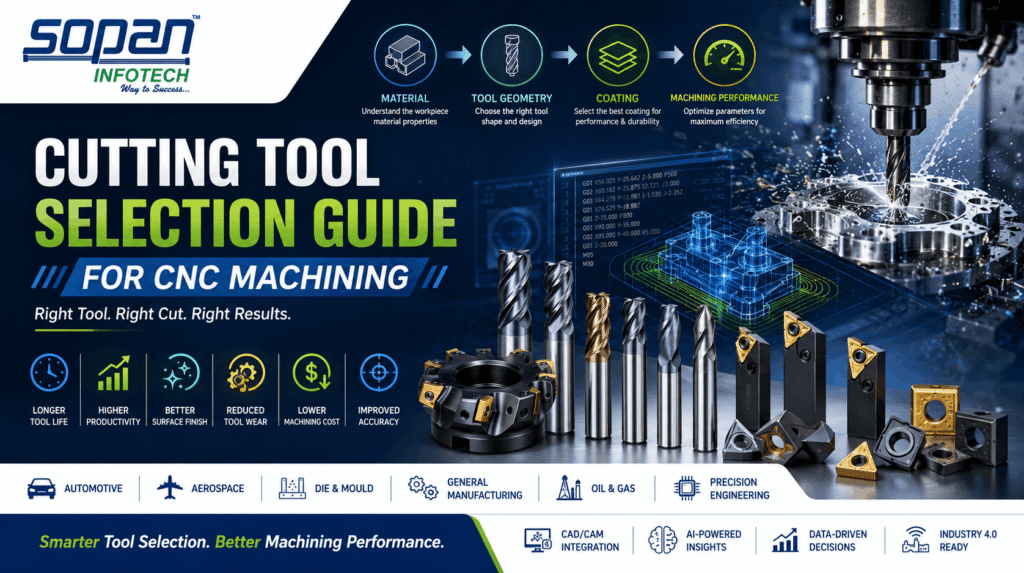
comcutting-tool-selection-guide-for-cnc-machining
This guide explains how to choose the correct cutting tools for CNC machining, especially for precision manufacturing in India and Gujarat.
Why Cutting Tool Selection Matters in CNC Machining
Proper cutting tool selection helps:
- Reduce machining time
- Improve surface finish
- Increase tool life
- Lower production cost
- Ensure consistent part quality
Cutting tools directly influence the performance of CNC machines and CAM programs.
Key Factors to Consider When Selecting Cutting Tools
1. Workpiece Material
Tool selection depends heavily on material properties.
Consider:
- Hardness
- Toughness
- Thermal conductivity
Examples:
- Carbide tools for steel
- Coated tools for hard materials
- Aluminum-specific cutters for soft alloys
2. Type of CNC Operation
Different operations require different tools.
Common CNC Operations:
- Milling
- Drilling
- Turning
- Finishing
Each operation demands specific tool geometry.
3. Cutting Tool Geometry
Tool geometry affects cutting efficiency and finish.
Key Parameters:
- Tool diameter
- Number of flutes
- Helix angle
- Nose radius
Proper geometry reduces vibration and improves accuracy.
4. Tool Material and Coating
Common Tool Materials:
- High-Speed Steel (HSS)
- Carbide
- Ceramic
Popular Coatings:
- TiN
- TiAlN
- AlTiN
Coatings increase tool life and performance at higher speeds.
5. Machine Capability and Rigidity
Tool choice must match machine capability.
Consider:
- Spindle speed
- Machine rigidity
- Tool holder type
Using advanced tools on underpowered machines reduces efficiency.
Role of CAM Software in Cutting Tool Selection
Modern CAM software plays a crucial role in tool selection.
CAM Advantages:
- Tool libraries with parameters
- Automated feed and speed calculation
- Toolpath optimization
- Collision detection
ESPRIT CAM recommends optimal tools and cutting parameters based on material and machine type.
Best Practices for Cutting Tool Selection
- Use manufacturer-recommended tools
- Avoid overloading tools
- Match tool to application
- Regularly inspect and replace worn tools
- Simulate toolpaths before machining
These practices ensure reliable and efficient CNC machining.
Industries Benefiting from Proper Tool Selection
- Automotive manufacturing
- Aerospace components
- Die & mould manufacturing
- Medical device machining
- Precision engineering
Manufacturers in Gujarat rely on optimized tool selection to stay competitive.
CNC & CAM Solutions by SOPAN Infotech
SOPAN Infotech Pvt. Ltd., your Authorized SOLIDWORKS Value-Added Reseller, provides complete CNC manufacturing solutions, including:
- Advanced CAM software (ESPRIT, VISI, WorkNC)
- Toolpath optimization
- Post-processor development
- Professional training and technical support
We help manufacturers achieve maximum efficiency and consistent quality.
Frequently Asked Questions (FAQ)
Why is cutting tool selection important in CNC machining?
Correct tool selection improves surface finish, reduces tool wear, and lowers production costs.
Which cutting tools are best for high-speed machining?
Carbide tools with advanced coatings are ideal for high-speed CNC machining.
Can CAM software help in tool selection?
Yes. CAM software like ESPRIT CAM provides optimized tool recommendations and cutting parameters.
Request a Quote for CNC & CAM Solutions
Need expert guidance on cutting tool selection and CAM optimization?
 Request a Quote from SOPAN Infotech Pvt. Ltd.
Get customized CNC machining solutions tailored to your manufacturing needs